 Store
Locator
Store
Locator





-
 How to Use
-
 Active Ingredients
-
 The Experience
-
 Strength and Concentration
-
 Serving and Usage Notes
-
 Review
Light it like any pre-roll and take slow, easy pulls. Start with half, set it down, and give it time before you decide on more. The label recommends waiting up to an hour. Do not use more than one pre-roll in 12 hours, and save it for when you are home for the night: do not drive or operate machinery after use.
Ingredients: Egyptian blue lotus flower (Nymphaea caerulea), natural terpenes and French rolling paper. No THC, no nicotine, no tobacco.
Blue lotus naturally contains plant compounds such as nuciferine and aporphine. Levels vary from flower to flower and batch to batch, so we do not list a standardized amount. The terpenes are there for flavor and aroma.
Blue lotus has been tied to ritual, relaxation and the evening for thousands of years, and that is still how most people use it. Expect a light, floral smoke and a mellow, dreamy shift in mood that suits the end of the day. It is not cannabis and it will not hit like cannabis, but it is noticeable. Everyone responds differently, so start low.
This product is not intended to diagnose, treat, cure or prevent any disease.
Each pre-roll holds 1 gram of blue lotus flower. That is plant weight, not a dose: how much you feel depends on how much you smoke, how you smoke it and your own body. Half a pre-roll is the right first session for most people.
For adults 21 and over. 0 THC, 0 nicotine. Not for use if pregnant or nursing. Do not drive or operate machinery after use. Some people feel drowsy or lightheaded, especially the first time. Talk to your doctor before use if you have a medical condition or take medication. Smoking any plant material carries risk. Not available in Louisiana.
What Is a Blue Lotus Pre-Roll?
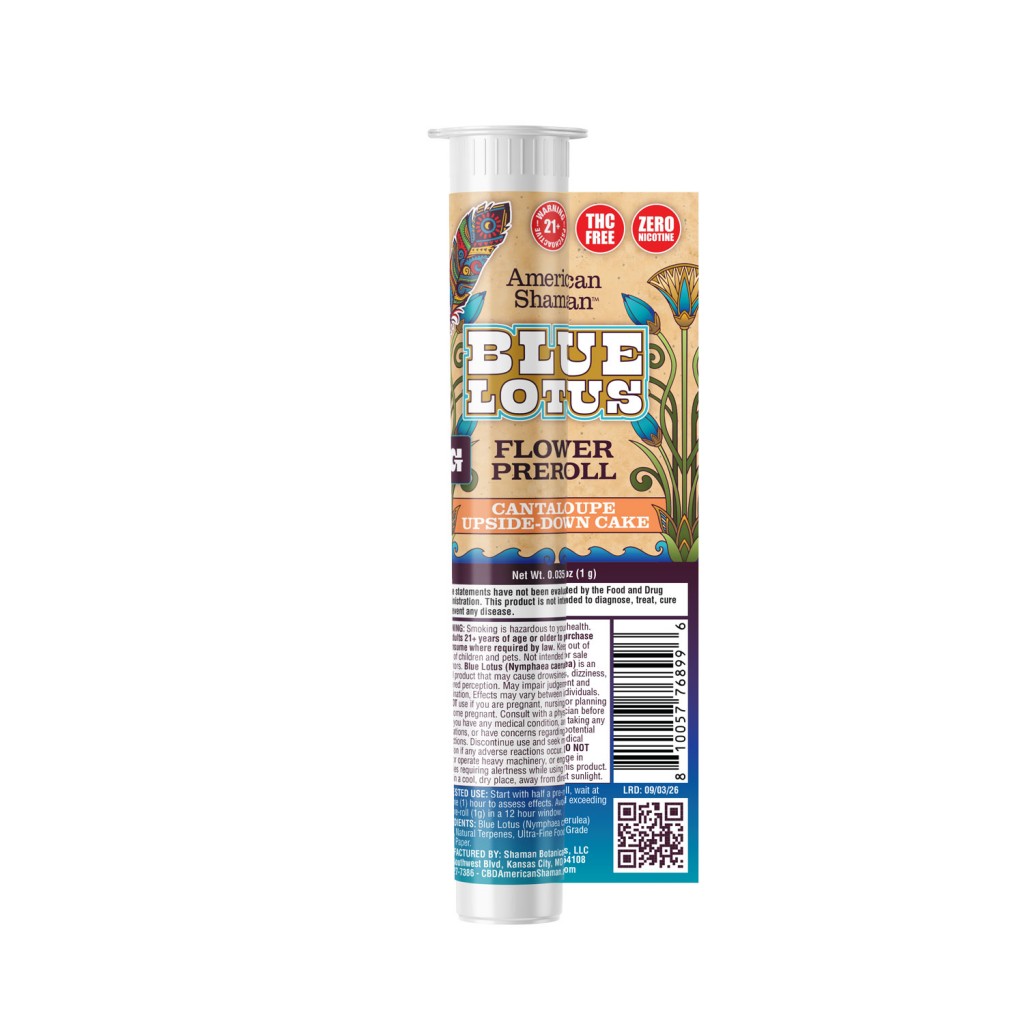
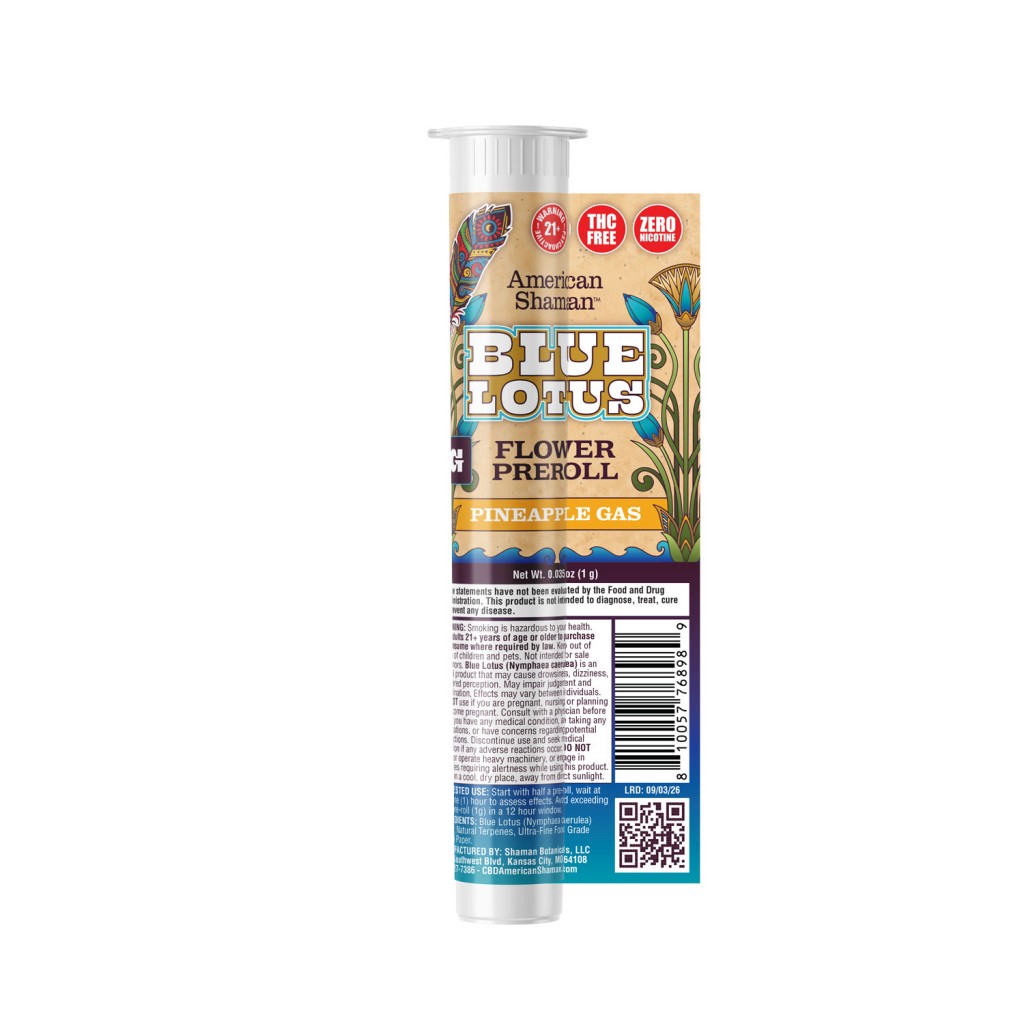
A blue lotus pre-roll is dried blue lotus flower rolled like a joint and ready to light. Ours holds 1 gram of Egyptian blue lotus (Nymphaea caerulea) with natural terpenes for flavor, rolled in French paper. It contains no THC, no nicotine and no tobacco, so it gives you the pre-roll ritual without cannabis or cigarettes.
What Is Blue Lotus?
Blue lotus is the blue water lily that grows along the Nile. Ancient Egyptians painted it on tomb walls and temple carvings and tied it to the sun, rebirth and the close of the day, because the flower opens every morning and closes every night. Botanically it is Nymphaea caerulea, a true water lily, and it is still one of the most recognizable flowers in Egyptian art.
Why People Are Reaching for Blue Lotus Pre-Rolls
Blue lotus pre-rolls have taken off with people who want a smokeable wind-down that is not cannabis. Some cannot have THC because of work or testing. Some just want something lighter. Blue lotus gives you a smooth, floral smoke and a calm, dreamy evening mood, with a story that goes back thousands of years.
Blue Lotus vs a Cannabis Pre-Roll
- Plant: blue lotus is a water lily. Cannabis is a different plant family altogether.
- THC: none in blue lotus.
- Experience: softer and dreamier than cannabis, but noticeable. Start with half.
- Ritual: the same. Light it, take your time, unwind.
Pick Your Flavor
- Pineapple Gas: tropical pineapple up front with a gassy finish.
- Cantaloupe Upside-Down Cake: sweet melon and dessert notes.
Want More Blue Lotus?
Once you know you like it, try the Snow Cone Blue Lotus Kief Coated Pre-Roll: the same flower frosted in blue lotus kief for a fuller pre-roll.
Where can you Buy Blue Lotus Flower Pre-Roll by American Shaman?
Blue Lotus Flower Pre-Roll by American Shaman remains available through the brand's official retail channel, including its primary website. Product listings include ingredient information, labeled weight, flavor variant options, and current pricing details. Age verification confirming 21 and older status applies before completing purchase through official retail channels. Reviewing product listings directly confirms current availability across specific flavor variants, including Pineapple Gas and Cantaloupe Upside Down Cake. Visiting theCBD American Shamanhomepage provides access to current product listings and brand information.
What Shipping Options are Available for Blue Lotus Flower Pre-Roll Orders?
Shipping options for Blue Lotus Flower Pre-Roll orders typically include standard and expedited delivery methods, depending on current carrier availability. Standard shipping represents the most commonly selected option among typical orders placed through official retail channels. Expedited shipping options offer reduced delivery time at an increased cost compared with standard service. Age verification requirements apply regardless of which shipping method a given order selects. Reviewing checkout details during purchase confirms currently available shipping methods and associated costs.
How Long does Standard Shipping Take?
Standard shipping typically takes between 3 and 7 business days from order processing to delivery, depending on destination distance. Processing time before shipment adds an additional 1 to 2 business days ahead of carrier transit time. Delivery estimates vary based on destination region, carrier performance, and seasonal order volume. Order confirmation emails typically include tracking information once a package ships from the fulfillment center. Reviewing order confirmation details provides the most accurate, order-specific delivery estimate.
Are Shipping Fees Refundable?
No, shipping fees are typically non-refundable once an order has shipped from the fulfillment center. Refund policies commonly apply to product cost rather than shipping charges already incurred during fulfillment. Exceptions occasionally apply in cases involving carrier error, lost packages, or confirmed fulfillment mistakes. Reviewing the retailer's published return policy clarifies specific conditions under which shipping fee exceptions apply. Contacting customer support directly resolves order-specific shipping fee questions outside standard policy terms.
What are the Terms and Conditions for Returning Blue Lotus Flower Pre-Roll?
Terms and conditions for returning Blue Lotus Flower Pre-Roll typically require unopened, unused product within a defined return window following delivery. Retailers commonly restrict returns on opened smokeable products due to safety and hygiene considerations applicable across the category. A defined return window, commonly between 14 and 30 days, applies depending on retailer policy. Proof of purchase, including order number or receipt, typically accompanies a submitted return request. Reviewing the retailer's published return policy directly confirms current terms applicable to Blue Lotus Flower Pre-Roll purchases.
Does Blue Lotus Get You High?
Blue lotus is not cannabis and contains no THC. People describe the experience as calm, mellow and dreamy rather than a cannabis high. It is gentler, but it is noticeable, and everyone responds differently, so start with half a pre-roll.
What Does a Blue Lotus Pre-Roll Feel Like?
Expect a light, floral smoke and a relaxed, easygoing mood that suits the end of the day. It is a wind-down, not a wake-up. Plan to be home for the night and do not drive or operate machinery after use.
How Long Does It Last?
It varies with how much you smoke and your own body. Plan on a relaxed evening rather than a quick break, and give your first half a full hour before deciding on more.
Can You Smoke Blue Lotus?
Yes. Dried blue lotus flower has been smoked and steeped for generations. Our pre-roll is ready to light, with nothing to grind or roll.
Does Blue Lotus Show Up on a Drug Test?
Standard drug panels screen for substances like THC, opioids, amphetamines and cocaine. Blue lotus is not one of them, and this pre-roll contains no THC. We cannot guarantee results on every test, so check with your testing provider if it matters.
Is Blue Lotus Legal?
Blue lotus is not a federally controlled substance. Louisiana restricts blue lotus for smoking, so this product is not available in Louisiana. Check your local laws before buying.
Who Should Skip It?
Anyone under 21, anyone who is pregnant or nursing, and anyone who needs to drive or stay sharp afterward. If you have a medical condition or take medication, talk to your doctor first.
Is Blue Lotus the Same as a Blue Water Lily?
Yes, Blue Lotus refers to the same plant commonly called the blue water lily, scientifically classified as Nymphaea caerulea. Common naming conventions across regions apply either term interchangeably to describe this aquatic flowering species. Botanical classification remains consistent regardless of which common name a given source applies. Historical Egyptian references frequently use terminology corresponding to blue water lily alongside Blue Lotus naming. Reviewing scientific naming, Nymphaea caerulea, confirms botanical identity regardless of common terminology applied.
Is Nymphaea caerulea a Water Lily?
Yes, Nymphaea caerulea is classified as a water lily within the Nymphaeaceae plant family. The species produces aquatic foliage and flowers, growing directly upon still or slow moving water surfaces. Nymphaea caerulea shares family classification alongside other Nymphaea species commonly recognized as water lilies globally. Distinct petal coloration, blue to violet tones, distinguishes Nymphaea caerulea from white or pink flowering relatives. Botanical classification confirms water lily status independent of regional common naming variation.
What is the Egyptian Water Lily?
The Egyptian water lily refers to Nymphaea caerulea, an aquatic flowering plant native to regions along the Nile River. Ancient Egyptian culture associated the Egyptian water lily with ritual, artistic tradition, and symbolic representation. The plant produces blue to violet petals surrounding a yellow central structure, typically opening during daylight hours. Modern botanical products reference the Egyptian water lily alongside Blue Lotus naming interchangeably. Reviewing historical Egyptian artwork frequently reveals depictions corresponding to this specific aquatic species.
What Does the Blue Water Lily Flower Look Like?
The Blue Water Lily flower displays blue to violet petals arranged around a golden yellow central structure. Petals extend outward within a layered, pointed formation typical of Nymphaea species. Broad, rounded leaves float upon the water surface surrounding the emerging flower stem. Flowers typically open during daylight hours, closing during evening periods across a repeated daily cycle.
Where does Blue Lotus Grow?
Blue Lotus grows within still or slow moving freshwater habitats, including ponds, along regions bordering the Nile River. Native distribution centers around Egypt and surrounding African regions, extending into parts of eastern Africa. Cultivated Blue Lotus specimens now grow within botanical gardens and water features across additional global regions. The plant requires warm climate conditions and consistent water access to support healthy growth. Commercial botanical products source Blue Lotus flower material from cultivated growing operations meeting quality standards.
What is the Origin of Blue Lotus?
Blue Lotus originates from regions along the Nile River within ancient Egypt, where the plant held cultural and botanical significance. Archaeological evidence, including tomb paintings and artifacts, documents Blue Lotus presence within Egyptian civilization spanning several millennia. The plant's aquatic habitat requirements limited early cultivation to regions with suitable freshwater access. Trade and cultivation gradually expanded Blue Lotus presence into additional regions beyond its original native range. Botanical classification traces modern Nymphaea caerulea specimens directly to this ancient Egyptian origin point.
What is Blue Lotus Known for in Ancient Egypt?
Blue Lotus is known within ancient Egypt for ceremonial, artistic, and symbolic representation across religious and cultural contexts. Tomb paintings frequently depict Blue Lotus alongside deities, offerings, and funerary imagery throughout Egyptian dynastic periods. The plant appeared within decorative motifs across temple architecture, jewelry, and household objects. Ancient Egyptian texts reference Blue Lotus alongside themes of rebirth and renewal tied to its daily opening and closing cycle. Archaeological and historical record continues documenting Blue Lotus significance across multiple periods of Egyptian civilization.
What does Blue Lotus Symbolize?
Blue Lotus symbolizes rebirth and renewal within ancient Egyptian tradition, tied directly to its daily flowering cycle. The flower opens each morning, closing each evening, a pattern ancient Egyptians associated with cyclical renewal and the sun. Religious imagery frequently paired Blue Lotus alongside solar deities and creation mythology. Funerary art incorporated Blue Lotus symbolism alongside themes of transition and continued existence beyond death. Modern interpretation continues referencing this historical symbolism within botanical and cultural discussion of the plant.
Important Legal Notice
For adults 21+ only. Not available in Louisiana. Blue lotus laws vary by location, so check your local laws before buying.
Legal Disclaimer
- Do not use if pregnant or nursing.
- Do not drive or operate machinery after use.
- Talk to your doctor before use if you have a medical condition or take medication.
- Smoking any plant material carries risk.
- This product is not intended to diagnose, treat, cure or prevent any disease.