






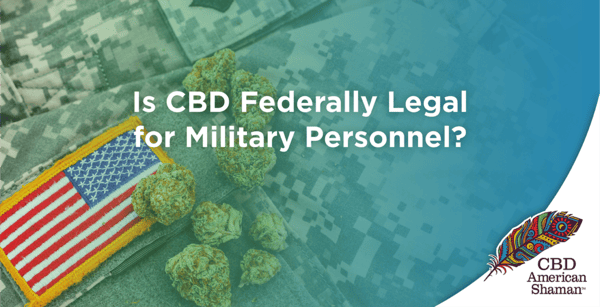
No, Cannabidiol (CBD) is not federally legal for military personnel. The 2018 Farm Bill, passed by the United States Congress, legalized hemp-derived CBD containing less than 0.3% THC under federal law. However, the Department of Defense (DoD) enforces a zero-tolerance drug policy that overrides civilian legislation and bans cannabis-derived substances, including CBD.
The zero-tolerance policy applies to all military branches (U.S. Army, U.S. Navy, U.S. Air Force, and U.S. Marine Corps), although minor differences in enforcement procedures exist between specific branches. Some manufacturers may actually produce CBD products containing trace amounts of THC without the consumer knowing, which can pose a risk even for products advertised as THC-free.
Active-duty military personnel, including enlisted soldiers and naval officers, undergo routine drug screenings. Any detection of THC, even in trace amounts, can lead to disciplinary consequences (discharge or loss of benefits).
Veterans (retired Army sergeants) are permitted to use CBD, but they are unable to access CBD through prescriptions from the U.S. Department of Veterans Affairs (VA). Former service members must follow state-specific regulations while avoiding products that contain any amount of THC.
The combination of the Department of Defense’s zero-tolerance policy, drug testing procedures, and risk of contamination provides a clear answer to the question “Can you use CBD in the military?” as a firm no, reinforcing the continued ban on CBD in the military for active-duty service members.
Is CBD Allowed for Use in the Military?
No, Cannabidiol (CBD) is not allowed for use in the military. The Department of Defense (DoD) prohibits the use of CBD products, including hemp-derived products, for all active-duty service members (Army, Navy, Air Force, Space Force, and Marine Corps). The CBD ban extends to Reserve and National Guard personnel and DoD civilian employees. The prohibition includes all CBD products, regardless of THC content or legality under civilian law.
The 2018 Farm Bill removed hemp and hemp-derived products, including CBD Oil, from the federal Controlled Substances Act, making them legal for civilian use. However, military policies take precedence over civilian legislation. CBD Oil is legal for the public, but it is not permitted under military policy.
Each military branch enforces the CBD ban through its own set of rules. For example, Army Regulation 600-85 explicitly forbids the use of hemp products (CBD). The Coast Guard bans any product derived from hemp, regardless of its THC concentration or civilian legality. Branch-specific rules are supported by official memoranda issued by the Department of Defense.
The Defense Department has issued multiple notices stating that all forms of CBD Oil, Delta-8 THC, and similar cannabinoids are not permitted under military policy. Violating the CBD use prohibition tends to result in disciplinary consequences (demotion, administrative action, or impact on security clearance) under military rules. The answer to “Can military use CBD?” is no, military personnel are prohibited from using CBD Oil in all forms.
Why does the Military Prohibit CBD Despite Federal Legalization?
The military prohibits CBD despite federal legalization because CBD use poses risks to readiness, drug testing, and discipline. The Department of Defense (DoD) bans all CBD products for service members, regardless of the 2018 Farm Bill. The CBD prohibition applies across all branches (Army, Navy) to support a drug-free military and uphold the Uniform Code of Military Justice (UCMJ).
CBD products are mislabeled and may contain more THC than allowed. Even products labeled “THC-free” may have trace amounts due to inconsistent production quality, which may increase the risk of testing positive during drug screenings.
Military drug tests screen for THC metabolites, not CBD. Using CBD oil, especially full-spectrum or improperly processed types, can lead to THC accumulation and trigger a failed test.
The DoD’s zero-tolerance policy addresses any detected drug use, including THC detection, as a violation. Punishments include rank reduction, separation, or court-martial, regardless of civilian legality.
The Food and Drug Administration (FDA) lacks strict CBD regulations, making it challenging to verify product quality. Only Epidiolex, a prescription-only product that has received FDA approval, is allowed for military use due to its controlled formulation and its approval for use in certain medical conditions.
When will CBD be Legal for Use in the Military?
CBD will be legal for use in the military when the Department of Defense (DoD) ends its current prohibition policy. No official timeline exists for this change, and the DoD has not indicated any plan to revise its stance. All military branches (Army and Air Force) continue to ban CBD and hemp-derived products.
Legislative action could influence future policy changes. Congress approved an amendment in 2020 to allow military CBD use, but the Pentagon rejected it and directed branches to maintain the ban under the Uniform Code of Military Justice (UCMJ).
Drug testing concerns remain a central reason for the ban. The military cites the risk of THC contamination in CBD products, which may result in positive drug test results and disciplinary action for service members.
Veterans groups and researchers continue to advocate for CBD access in the military. Their efforts focus on promoting CBD’s potential wellness benefits for issues like mood or discomfort among service members and veterans.
Shifting public opinion increases pressure for policy reform. CBD is widely accepted and legal for civilians, and many states support cannabis-related products. However, the military maintains its restrictions until formal changes are made by either the DoD or Congress.
How do Military Branches Differ in Enforcing CBD Policy?
Military Branches differ in enforcing the CBD policy by applying a uniform ban, while implementing distinct enforcement and communication strategies across service branches (Army, Navy, Marine Corps, Air Force, Coast Guard).
The Army was among the first to prohibit CBD use and recently updated its policy to ban intoxicating hemp-derived cannabinoids (delta-8 THC). The update highlights the Army’s proactive stance toward emerging hemp-based substances.
The Air Force implemented an early ban on CBD. It allows exceptions only for certain approved prescription medications containing CBD, making its policy more medically specific than other branches.
The Navy enforces a clear and detailed ban. ALNAV 074/20 prohibits Sailors from using any hemp-derived product, including products with no measurable THC. Previously allowed products (hemp shampoo) are now included under the ban.
The Marine Corps applies a complete prohibition, warning Marines not to use CBD in any form, including topicals (creams and soaps). The directive aligns with Navy regulations but is reinforced through direct advisories.
The Coast Guard enforces the policy with the most immediate consequences. Testing positive for THC tends to result in disciplinary action under Coast Guard policy, regardless of whether the source was CBD. Coast Guard leadership has issued repeated service-wide notices to reinforce zero tolerance.
Military enforcement is shaped by each branch’s internal policies, published regulations, and command memos, ensuring consistent standards while addressing unique operational demands.
Can Military Use Hemp Lotion?
No, military personnel cannot use hemp lotion. The United States Navy prohibits sailors from using any product made or derived from hemp (lotions, soaps, and shampoos). The United States Marine Corps bans Marines from using topical hemp products in any form. The United States Coast Guard enforces the same restriction against hemp-based personal care items.
The United States Army and United States Air Force apply identical policies, banning soldiers and airmen from using hemp or CBD products, including topicals, regardless of THC content or product labeling.
The Department of Defense clarified in a formal memorandum that all service members are prohibited from using hemp-derived products, even if applied to the skin. The Navy’s ALNAV 074/20 policy states explicitly that sailors and Marines must not use any item derived from hemp under federal definitions, including CBD lotions and creams.
The Department of Defense determined that hemp lotions and similar topicals pose a risk of interfering with drug test results. The military leadership concluded that the use of hemp-derived products jeopardizes readiness and testing reliability. The Department of Defense considers the use of hemp lotion by any active-duty service member a punishable offense under the Uniform Code of Military Justice.
Are Hemp-Infused Topicals Allowed in the Military?
No, hemp-infused topicals are not allowed for military personnel. All branches of the U.S. Armed Forces (Navy and Army) prohibit service members from using any product made or derived from hemp, including CBD topicals. The restriction covers shampoos, lotions, creams, and soaps regardless of THC content.
The Department of Defense expanded the ban due to concerns about transdermal absorption. Hemp-derived compounds like THC can enter the body through the skin, which creates a risk of testing positive during military drug screening.
For example, the Navy updated its drug policy to ban topical hemp products to ensure drug testing accuracy specifically. The policy update supports a broader effort across the military to eliminate exposure to unauthorized substances, including CBD topicals.
Suggested alternatives include non-hemp skincare products that relieve discomfort without CBD. Acceptable options include over-the-counter creams with menthol or capsaicin, which contain no hemp ingredients.
Violation of the restriction on hemp-derived products, including CBD topicals, tends to lead to criminal penalties under the Uniform Code of Military Justice (UCMJ).
Can you Smoke or Vape CBD in the Military?
No, you cannot smoke or vape CBD in the military. All forms of CBD use, including inhalation methods (smoking and vaping), are banned for service members across all branches (Army and Navy), regardless of state laws or hemp origin.
The Department of Defense prohibits CBD because military drug testing fails to distinguish between THC from cannabis and THC present in CBD products. Even legal CBD tends to contain up to 0.3% THC, which is enough to result in a positive test and tend to result in disciplinary action.
Unregulated CBD cigarettes present additional risks. Vaping products contain inaccurate THC levels, synthetic chemicals, or other undesirable or unlisted substances not disclosed on product labels. CBD vape cartridges and pens are concerning due to frequent labeling inaccuracies and chemical contamination.
A positive drug test can lead to serious consequences (court-martial, administrative separation, rank reduction, and loss of security clearance). The military treats CBD inhalation methods as violations of established drug policies.
Will CBD Show Up on a Military Drug Test?
Yes, CBD will show up on a military drug test if it contains THC. Military drug tests do not target CBD directly. The Department of Defense screens for THC, the psychoactive compound in cannabis. THC is often found in small amounts in hemp-derived CBD products.
Drug tests used by the military detect THC-COOH (11-nor-9-carboxy-THC), a metabolite the body creates after processing THC. The THC-COOH compound can remain in urine for several days or weeks, depending on the frequency of use.
Full-spectrum CBD products (oils or capsules) contain trace amounts of THC. The legal THC limit in hemp-derived products is 0.3%. Frequent use of full-spectrum CBD allows THC-COOH, the metabolite linked to THC, to accumulate in the body and trigger a positive test result.
Broad-spectrum and CBD isolate products are labeled “THC-free,” but cross-contamination during manufacturing or inaccurate labeling by CBD producers can still introduce THC.
Using CBD Oil on Drug Test screenings increases the risk of testing positive for THC. Military service members face disciplinary action or administrative consequences when drug test results show THC exposure from CBD use.
What are the Disciplinary Actions for CBD Use in the Military?
The disciplinary actions for CBD use in the military are listed below.
- Nonjudicial Punishment (NJP) can be imposed under Article 15 of the Uniform Code of Military Justice (UCMJ) for enlisted personnel who test positive for THC due to CBD use. Commanders in the Army and Marine Corps tend to enforce stricter penalties for junior enlisted members, which include forfeiture of pay, reduction in rank, or assignment to extra duties. Full compliance helps avoid disciplinary marks that could hinder future advancement.
- Court-martial proceedings are sometimes initiated for serious or repeated CBD-related THC violations, especially for officers, senior noncommissioned officers (NCOs), or personnel in sensitive assignments. The Air Force and Navy are more likely to escalate violations for higher-ranking members, leading to confinement, punitive discharge, or loss of veterans’ benefits. Total compliance helps protect legal standing and preserve one’s military career.
- Administrative Separation is commonly initiated following a positive THC test linked to CBD use. Army and Marine Corps commands often pursue separation actions, which often lead to General or Other Than Honorable (OTH) discharges. The outcomes tend to damage post-service job prospects. Adhering strictly to the CBD policy ensures retention and preserves service eligibility.
- Loss of Security Clearance can follow a failed drug test caused by CBD oils or topicals, particularly for Air Force and Navy personnel assigned to intelligence, cybersecurity, or other classified roles. Clearance revocation tends to remove personnel from critical assignments and limit career progression. Avoiding CBD use helps maintain access to sensitive duties and national security roles.
- Denial of Reenlistment or Promotion is likely after any CBD-related drug violation across all service branches. Promotion boards and reenlistment evaluators often view such incidents unfavorably, especially for senior enlisted ranks and junior officers. Adhering to substance use policies helps stay eligible for advancement and continued service.
- Mandatory Substance Abuse Counseling is frequently required in the Coast Guard and Navy, even when CBD use was unintentional. Counseling is typically documented in the service record and has the potential to delay promotions or reassignments. Junior enlisted members are more typically referred to. Demonstrating accountability through compliance supports a record of reliability and professionalism.
- Written Reprimands or Counseling Statements are usually issued as initial responses to minor or first-time offenses. The records remain in a member’s official personnel file and often affect evaluations, transfer opportunities, and promotion potential. Officers and senior NCOs risk stalled careers if reprimanded. Observing the CBD ban protects reputation and advancement potential.
Does Accidental Ingestion of THC from CBD Count as a Violation?
Yes, accidental ingestion of THC from CBD counts as a violation under military drug policy. The U.S. military applies a strict liability standard for drug use, meaning any positive drug test is considered a violation, regardless of how THC entered the service member’s body. The rule applies equally to all branches, including the Army, Navy, Air Force, Marines, and Coast Guard.
Military policy does not consider intent when evaluating test results. Courts and administrative bodies do not excuse drug violations, even if the THC came from mislabeled or contaminated products. A service member (junior enlisted soldier) is expected to avoid any risk of ingesting banned substances.
Early self-reporting is advised if accidental use is suspected. A service member must notify their chain of command and speak with a military attorney before any drug testing occurs. Prompt reporting tends to affect the severity of punishment, but does not eliminate consequences.
Using full-spectrum CBD may raise the likelihood of unintentional THC exposure. CBD products (oils or gummies) contain legal trace levels of THC that can accumulate and trigger a failed test. Avoiding such products is essential for compliance with military regulations.
Is CBD Use Allowed for Military Veterans?
Yes, CBD use is allowed for military veterans. Active-duty military drug policies do not bind veterans, and the Department of Defense does not govern the veteran’s personal use of CBD after discharge from military service.
Federal law permits the use of hemp-derived CBD products containing less than 0.3% THC. California, Texas, Florida, New York, and Colorado allow the legal sale and personal use of CBD. However, Idaho, Nebraska, and South Dakota maintain tighter restrictions or outright bans on non-prescription CBD.
The U.S. Food and Drug Administration does not regulate the quality or consistency of most over-the-counter CBD products. The regulatory gap makes it essential for veterans to rely on third-party lab testing and choose reputable manufacturers to reduce the risk of consuming mislabeled or contaminated products.
Department of Veterans Affairs’ Veterans Health Administration (VHA) physicians do not legally prescribe CBD, but veterans may still discuss potential considerations with VA healthcare providers. Medical guidance can help avoid interactions between CBD and medications prescribed for common wellness concerns (discomfort, tension, or mood changes).
Can Veterans Receive CBD Recommendations Through the VA?
No, veterans cannot receive CBD recommendations through the VA. The Department of Veterans Affairs (VA) does not prescribe or officially recommend CBD products. VA healthcare providers, including physicians in the Veterans Health Administration (VHA), follow federal laws that prohibit recommending or endorsing CBD, even in states where CBD is legal. The federal restriction applies to all forms of CBD (oils, capsules, edibles, and creams).
The U.S. Food and Drug Administration (FDA) has not approved CBD for general medical use. The only FDA-approved CBD medication is Epidiolex, which is approved for managing rare seizure-related syndromes. The lack of FDA approval prevents the VA from including CBD in its wellness programs or offering it as a wellness option for veterans exploring health support alternatives.
VA healthcare providers are allowed to discuss CBD use with veterans. Veterans must speak openly with their VHA physicians about using products like CBD oils or gummies. Discussions about CBD use help identify potential interactions and guide informed decisions about wellness strategies.
Are there CBD Products Specifically Designed for Veterans?
Yes, there are CBD products specifically designed for veterans. Sleep support formulations for veterans often combine CBD with melatonin or herbal extracts like chamomile. CBD-infused sleep tinctures support relaxation and promote nighttime calm.
Formulas designed to help manage occasional stress and tension typically use CBD isolate or broad-spectrum CBD with calming compounds (L-theanine or ashwagandha). The formulations are available in capsule, tincture, or gummy form.
Topicals and high-strength tinctures created for discomfort support are designed with elevated CBD concentrations. Some include added cannabinoids like Cannabigerol (CBG) or Cannabinol (CBN) for added wellness support (full-spectrum CBD topicals).
Emotionally balanced support products formulated for veterans feature CBD combined with natural mood-supporting botanicals. Sublingual oils and gummies with calming blends are typically sold to support emotional well-being.
Veteran-specific CBD products are offered in military-inspired packaging and familiar formats (roll-ons, softgels, and travel kits). Some companies provide curated product bundles that target common veteran wellness goals.
Verifying third-party lab tests is essential. Certificates of Analysis (COAs) must confirm CBD content, verify THC levels under 0.3%, and screen for contaminants (pesticides or heavy metals). Products must be evaluated based on lab results, not branding.
Are there Any Exceptions or Medical Waivers for CBD Use in the Military?
No, there are no exceptions or medical waivers for CBD use in the military. The Department of Defense does not issue medical waivers for CBD use. The Army, Navy, Air Force, Marine Corps, and Coast Guard follow a strict zero-tolerance policy on CBD products.
No military medical authority has the power to authorize CBD use for service members. Civilian prescriptions nor unit commanders are allowed to override the Department of Defense’s prohibition.
The only rare exception involves Epidiolex, a federally authorized CBD medication used under strict medical supervision for qualifying neurological conditions. Even Epidiolex must be approved and prescribed through a military medical facility, following strict protocols.
Military healthcare providers are required to prescribe alternatives listed in the military formulary. Service members are prohibited from using products like CBD gummies or oils, even if recommended by civilian doctors.
Service members seeking care are expected to consult a military medical officer to explore approved options. Military medical professionals are authorized to recommend legal care options that comply with military drug policies.
Has the Military Ever Considered Reversing the Ban on CBD?
Yes, the military has considered reversing the ban on CBD through legislative amendments, policy debate, and coordinated advocacy, although a formal policy reversal has not been implemented.
A significant milestone occurred when Representative Tulsi Gabbard introduced an amendment to the National Defense Authorization Act (NDAA) in July 2020. The House of Representatives approved the proposal, which aimed to prevent the Secretary of Defense from banning hemp-derived products, including CBD, for military members. The proposal addressed the Department of Defense’s zero-tolerance approach to CBD, which stems from concerns about trace THC content in hemp products. The amendment did not survive final legislative negotiations, yet it demonstrated clear congressional interest in challenging the existing ban. Lawmakers have since proposed additional cannabis-related provisions in NDAA drafts, showing continued momentum within appropriations processes to reconsider CBD policies for service members.
Veteran advocacy groups have amplified pressure for change by working directly with CBD companies to increase access for former military personnel. Partnerships between veteran organizations and hemp firms highlight a growing movement to legitimize CBD use among service-connected populations. Tulsi Gabbard emerged as a central figure in the reform movement, using her time in Congress to build bipartisan coalitions focused on cannabis reform for active-duty service members and veterans alike.
Strong public sentiment has supported legislative proposals. Polling consistently reflects widespread acceptance of cannabis-derived therapies, especially for veterans. Grassroots petitions have gained traction, urging the Department of Defense to modernize its policies. Federal entities, including the Department of Veterans Affairs, have supported studies on the potential therapeutic effects of cannabis compounds, contributing to a growing body of research relevant to military health policy.
Actions by lawmakers, support from veterans’ groups, growing public approval, and ongoing research show that civilian leaders and military officials are seriously thinking about changing the rules that ban CBD in the armed forces.