







Cannabigerol (CBG) is a chemical identity as a specific phytocannabinoid. CBG Plants produce the substance through biological processes that occur during the early stages of growth. Beginners encounter cannabigerol (CBG) when exploring the hemp-derived products available on the market. CBG refers to a unique molecular structure that differs from more common cannabinoids (CBD or THC). Understanding cannabigerol requires a basic look at how plants develop their chemical profiles. Specialized breeding efforts allow for higher yields of the compound in some hemp strains. Product labels use the abbreviation to indicate the presence of the specific plant extract. Laboratory testing confirms the identity and purity of the substance for commercial distribution. Knowledge of the compound helps consumers in recognizing the variety of plant-based options. Each cannabinoid carries its own distinct characteristics within the plant kingdom.
What Does CBG Do?
Cannabigerol (CBG) binds with cannabinoid CB1 and CB2 receptors within the human body, which are found in the brain, nervous system, and immune-related tissues. CBG is one of the compounds found in full-spectrum hemp products that contributes to what researchers call the “entourage effect,” where multiple cannabinoids work together within the body’s natural systems. CBG has a direct affinity for receptor types, making its interaction with the endocannabinoid system (ECS).
What Are the Effects of CBG?
The effects of cannabigerol (CBG) include a sense of steadiness and balance. Consumers who incorporate CBG into wellness routines describe experiencing a calming quality without unwanted grogginess. The effects may be felt in multiple areas because CBG interacts with CB1 and CB2 receptors, including mood and physical comfort. Consumers describe CBG as complementing the effects of other cannabinoids when taken together in full-spectrum hemp formulas.
Does CBG Get You High?
No, cannabigerol (CBG) does not produce intoxicating effects. CBG is a non-intoxicating cannabinoid, which does not produce the mind-altering effects commonly associated with THC (tetrahydrocannabinol). CBG and THC are found in the cannabis plant, which interact with the body’s receptors in different ways. THC binds strongly to CB1 receptors in the brain and produces psychoactive effects, whereas CBG binds to the same receptors without producing psychoactive effects. Consumers who take CBG-containing products report feeling clear-headed and functional throughout the day. The distinction makes CBG a preferred option for consumers seeking the potential wellness benefits of hemp-derived cannabinoids without any impairing effects.
What Does CBG Mean?
CBG means cannabigerol, a natural compound found in the hemp plant, belonging to a group of substances known as cannabinoids. Cannabinoids are chemical compounds that interact with receptors (CB1 and CB2) in the human body within the endocannabinoid system (ECS). CBG is one of over 100 known cannabinoids identified in the cannabis sativa plant. Cannabigerol is a minor cannabinoid because it appears in small concentrations in most mature hemp plants. CBG has gained researchers’ and hemp product consumers’ interest despite its low natural abundance. Familiarizing CBG starts with recognizing it as a naturally occurring hemp compound with a unique place in cannabinoid science, which makes it one of the more scientifically interesting subjects in hemp research today.
What Does CBG Stand For?
CBG stands for cannabigerol, a naturally occurring cannabinoid found in the Cannabis sativa plant. The name follows the same naming convention used for other well-known cannabinoids, such as CBD (cannabidiol) and THC (tetrahydrocannabinol). Cannabigerol is important in cannabis and hemp research because it is the foundational compound from which other cannabinoids are biosynthesized. The acidic precursor to CBG is Cannabigerolic acid (CBGA), which is called the “stem cell” of cannabinoids within scientific literature. The CBGA converts into various other cannabinoid acids as the hemp plant matures, and it makes cannabigerol a subject of strong scientific interest.
Is CBG Short for Cannabigerol?
Yes, CBG is short for cannabigerol, which is the full scientific name for the naturally occurring compound found in the hemp plant. The abbreviation CBG is used in hemp industry literature, product labeling, and scientific publications as a standard shorthand for the full term. The abbreviation CBG follows the same established convention used across cannabinoid science. The term cannabigerol was first identified and named by researchers in the 1960s, marking one of the earliest documented discoveries of a hemp-derived cannabinoid. Cannabigerol continues to be studied for its unique properties and its foundational role in the biosynthesis of other cannabinoids within the hemp plant.
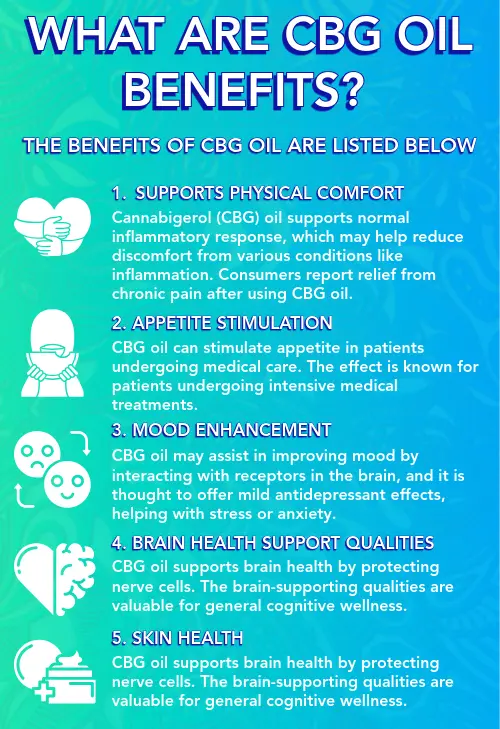
What are CBG Oil Benefits?
The benefits of CBG oil are listed below.
- Supports Physical Comfort: Cannabigerol (CBG) oil supports normal inflammatory response, which may help reduce discomfort from various conditions like inflammation. Consumers report relief from chronic pain after using CBG oil.
- Appetite Stimulation: CBG oil can stimulate appetite in patients undergoing medical care. The effect is known for patients undergoing intensive medical treatments.
- Mood Enhancement: CBG oil may assist in improving mood by interacting with receptors in the brain, and it is thought to offer mild antidepressant effects, helping with stress or anxiety.
- Brain Health Support Qualities: CBG oil supports brain health by protecting nerve cells. The brain-supporting qualities are valuable for general cognitive wellness.
- Skin Health: CBG oil has shown promise in supporting skin comfort and balance, and it may help manage conditions like acne by reducing sebum production and inflammation.
What Is CBG Oil Good For?
CBG oil is used for various health purposes in managing pain, reducing inflammation, and supporting overall wellness. CBG is used as an alternative remedy for conditions like glaucoma, anxiety, and skin issues. Consumers turn to CBG oil due to its potential to stimulate appetite, manage neurodegenerative diseases, and improve mood. The initial studies suggest it may offer general wellness support in managing chronic conditions.
Is CBG Oil Good for Sleep?
Yes, CBG oil may help improve sleep quality. CBG may have relaxing effects on the body, potentially aiding in sleep disorders like insomnia. CBG works differently from CBD or THC, as its effects on sleep are more related to its ability to reduce stress and promote relaxation rather than directly causing sedation.
What is CBG in Cannabis and Hemp?
Cannabigerol (CBG) in cannabis and hemp is a naturally occurring cannabinoid. CBG is considered a precursor to other cannabinoids (THC and CBD). CBG is gaining attention for its potential wellness-related properties, which support normal inflammatory response, physical comfort, and brain health, although it is present in low concentrations in most cannabis strains. Early studies suggest that CBG may offer health benefits. The question, “What is Hemp?” relates to the legal definition of cannabis plants containing less than 0.3 % THC.
Why is CBG called the Mother Cannabinoid?
Cannabigerol (CBG) is called the “Mother Cannabinoid” because of its importance in the biosynthesis of other cannabinoids in the cannabis plant. CBG is synthesized early in the plant’s growth cycle, and as the plant matures, CBG is converted into other cannabinoids such as THC (tetrahydrocannabinol) and CBD (cannabidiol) through the activity of enzymes. The transformation occurs when CBG interacts with enzymes (THC synthase and CBD synthase), converting it into more abundant cannabinoids.CBG is integral to the formation of the major compounds in cannabis, which is why it has earned the nickname of the “Mother Cannabinoid.” The foundational role in cannabinoid development is an aspect of the plant’s chemistry.
Is CBGA the precursor to CBG?
Yes, CBGA (cannabigerolic acid) is the precursor to Cannabigerol (CBG). CBGA is the acidic form of CBG and acts as the initial compound in the cannabinoid biosynthesis pathway in cannabis plants. The cannabigerolic acid undergoes enzymatic processes that convert it into CBG, as the plant matures, and other cannabinoids (THC and CBD). The conversion of CBGA to CBG is crucial because it sets the foundation for the creation of other cannabinoids, influencing the overall chemical profile of the cannabis plant.
What is CBG Compound Classification?
The Cannabigerol (CBG) compound classification is a non-intoxicating cannabinoid. CBG does not produce altered perception, unlike Tetrahydrocannabinol (THC), which is known for its psychoactive effects. CBG makes it distinct from other cannabinoids (THC and CBD), which have more noticeable effects on the body and mind. CBG’s non-intoxicating nature makes it an appealing option for consumers looking to benefit from cannabis without experiencing the psychoactive properties associated with THC. Consumers find CBG beneficial for its potential wellness-related properties without affecting daily clarity or function.
How is CBG commonly categorized?
Cannabigerol (CBG) is commonly categorized as a minor cannabinoid by lower concentrations compared to more well-known cannabinoids (THC and CBD). CBG levels are much lower in most commercial strains, while it is present in the cannabis plant. The categorization of CBG can vary depending on the specific cannabis strain and product formulation. Products formulated with higher concentrations of CBG may have different overall effects compared to lower concentrations. The presence of THC in some formulations can affect the impact of CBG, potentially improving or altering its effects depending on the specific product composition and THC levels.
Does CBG contain THC?
No, Cannabigerol (CBG) does not contain Tetrahydrocannabinol (THC). CBG is a distinct cannabinoid, separate from THC, and is typically extracted in its pure form without the inclusion of THC. However, in many CBG-based products, trace amounts of THC may be present, especially if the product is derived from a full-spectrum cannabis extract. The trace amounts of THC usually remain within legal limits, ensuring that the product does not cause psychoactive effects. The specific amount of THC present in finished CBG products can vary based on the extraction process and the type of cannabis strain used, with some formulations containing negligible amounts of THC, while others may have higher concentrations.
What Is the Difference Between CBD vs CBG?
The difference between CBD vs CBG is listed below.
- Structure: CBD (Cannabidiol) and CBG (Cannabigerol) are cannabinoids found in cannabis, but they have different molecular structures. CBG is the precursor to many cannabinoids, including THC and CBD, while CBD is a standalone cannabinoid that does not convert into other compounds.
- Abundance: CBD is more abundant in cannabis plants than CBG, as it is one of the major cannabinoids present in higher concentrations. CBG is found in lower quantities in most commercial cannabis strains, making it a ‘minor” cannabinoid.
- Product Use: CBD is used in products including oils, tinctures, topicals, and edibles, due to its popularity and recognition. CBG is included in wellness products, but its use is less common compared to CBD. CBG is found in tinctures, capsules, and some specialized cannabis formulations.
How Do CBD and CBG Compare for Pain?
CBD and CBG are compared for pain through their pain-relieving properties. CBD works by interacting with the body’s endocannabinoid system (ECS) through the CB1 and CB2 receptors to reduce inflammation and provide relief from chronic pain. CBG may have a more direct influence on the body’s inflammatory response, reducing muscle spasms and inflammation more effectively in some users. Cannabinoids have shown promise for pain management, but the mechanisms and potency in addressing pain may vary based on the specific condition or individual response. Comparing CBG vs CBD helps consumers understand their differences.
Is CBG Better Than CBD for Pain?
No, CBG is not better than CBD for pain. CBD is well-known for supporting a normal inflammatory response and is used for chronic discomfort associated with certain joint conditions. CBG has a more localized impact, potentially easing muscle spasms and reducing inflammation. CBG is non-intoxicating like CBD, and does not cause psychoactive effects. The choice between CBD and CBG for pain relief depends on individual needs and how the body responds to each compound.
What is CBG in Gummies and Edibles?
CBG in gummies and edibles is a pre-measured dosage form of Cannabigerol infused into food products for wellness purposes. The CBG can be found in other edible formats (chocolates, capsules, and beverages). The products are designed to provide a slow, consistent release of CBG, offering a longer-lasting effect compared to methods (smoking or vaping). CBG-infused gummies are an edible format of cannabinoid use, with each gummy containing a specific amount of CBG. The products offer a convenient and discreet way to consume CBG gummies in a pre-measured dosage form.
How is CBG used in Gummies and Edibles?
CBG is used in gummies and edibles through a cannabinoid-infused ingredient designed to offer potential wellness benefits in a convenient, easy-to-consume form. The products are formulated with CBG extract or distillate, providing a consistent dose in each serving. CBG edibles are popular for their discreet use and long-lasting effects, as they are metabolized in the digestive system. The CBG products are marketed as a way to support general wellness and can be found in various flavors and formulations, providing a non-intoxicating alternative to other forms of cannabis consumption.
Is CBG Oil different from CBG Flower?
Yes, CBG oil is different from CBG flower. CBG oil is an extract derived from cannabis or hemp plants, often containing a concentrated form of CBG with trace amounts of other cannabinoids and terpenes. The primary differences between CBG oil and CBG flower are their form, source, and method of consumption, with oil providing more controlled doses and flower offering a traditional, plant-based experience. CBG is used in tinctures or oils, providing a simple and discreet way to consume CBG. CBG flower is the raw, unprocessed flower of the cannabis plant that naturally contains CBG. The CBG flower (smoked or vaporized) offers a more direct form of consumption.
What is the relation between CBG and the Endocannabinoid System?
The relationship between CBG and the endocannabinoid system is a “precursor partners.” CBG (Cannabigerol) interacts with the body’s endocannabinoid system (ECS), a complex network of receptors that helps maintain homeostasis. The ECS includes two primary receptors (CB1 and CB2) that are involved in regulating various physiological processes such as mood, appetite, pain, and inflammation. CBG is thought to influence the ECS by binding to CB1 and CB2 receptors, although it does so differently from THC or CBD.
Is CBG associated with CB1 and CB2 receptors?
Yes, CBG is associated with CB1 and CB2 receptors. CBG can interact with the receptors in the endocannabinoid system. CBG has a mild affinity for CB1 receptors, which are primarily found in the brain and central nervous system, and a stronger affinity for CB2 receptors, which are more prevalent in the peripheral nervous system and immune system. CBG’s effects are being studied, and its influence on the receptors is less understood compared to THC and CBD. CBG interacts with the receptors, and its impact may differ from the well-known actions of other cannabinoids.
What is the Legal Status of CBG?
The legal status of CBG (Cannabigerol) varies depending on its source, Tetrahydrocannabinol (THC) content, product format, and jurisdiction. CBG derived from hemp plants is legal as long as it contains less than 0.3% THC, adhering to the legal definition of hemp. Regulations may be stricter in other regions or states regarding the specific cannabinoid concentrations or the type of product being sold (e.g., oils, tinctures, edibles). Check local laws to ensure compliance, as rules surrounding CBG may differ across different areas.
How do Federal rules apply to Hemp-derived CBG?
Federal rules apply to hemo-derived Cannabigerol (CBG) by the 2018 Farm Bill in the United States, which legalized hemp products that contain no more than 0.3% Tetrahydrocannabinol (THC) on a dry weight basis. Hemp-derived CBG falls under the same regulatory framework as hemp-derived CBD, as long as it meets this THC threshold. Product formulations or distribution methods may be subject to additional regulations, while hemp-derived CBG is federally legal. State laws may differ, and hemp-derived products are not universally considered legal in all circumstances.
Do State laws treat CBG differently?
Yes, state laws can treat Cannabigerol (CBG) differently. Each states have their own laws regarding the cultivation, sale, and use of cannabis products, while federal regulations may allow hemp-derived CBG. Other states may allow the sale of CBG products, while others may have stricter regulations or ban other types of cannabis-related products. The rules can vary depending on the type of product, whether it is a tincture, edible, or topical, and whether it contains any trace amounts of Tetrahydrocannabinol (THC). Consumers must check local laws to understand how CBG products are regulated in their state.
What is the CBG Strain?
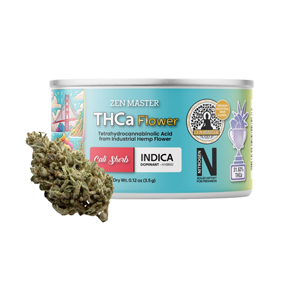
A Cannabigerol (CBG) strain refers to a specific variety of cannabis plant that is bred to produce higher levels of cannabigerol (CBG). The strains are cultivated with the goal of maximizing CBG content, which is present in lower concentrations in most cannabis plants. CBG strains have become more popular as interest in the cannabinoid grows, particularly for its potential wellness-related benefits. The THCA flowers strain differs from traditional cannabis strains, which are bred for higher THC or CBD content.
How is a CBG Strain Different from Other Cannabis Strains?
A Cannabigerol (CBG) strain is different from other cannabis strains by its cannabinoid profile. CBG strains are bred to produce higher concentrations of CBG, the “mother cannabinoid” that acts as the precursor to THC and CBD, while most cannabis strains contain big amounts of THC or CBD. The strains have lower levels of THC and are sought after for their wellness-related effects without the psychoactive properties associated with THC. The difference in cannabinoid composition makes CBG strains a unique option for users seeking non-intoxicating benefits.
Does a CBG Strain Get You High?
No, a Cannabigerol (CBG) strain can not produce intoxicating effects. Cannabigerol (CBG) is non-intoxicating, which does not produce the psychoactive effects commonly associated with THC. CBG does not bind to the CB1 receptors in the same way that THC does, which is responsible for psychoactive effects, while CBG interacts with the endocannabinoid system. CBG strains are used for the potential wellness benefits without experiencing psychoactive effects.