








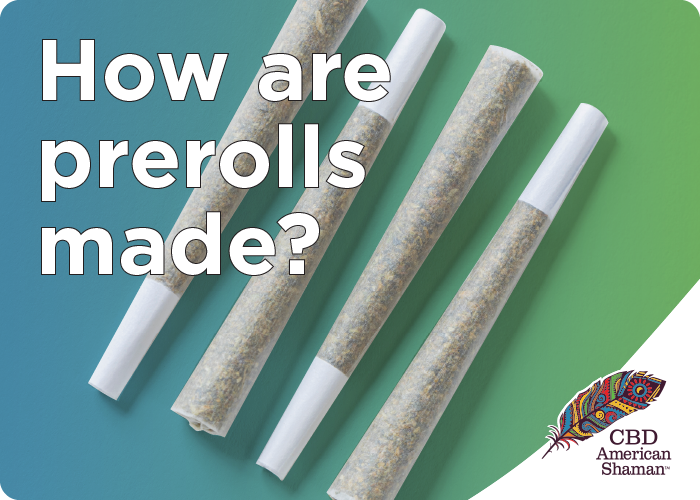
Pre-rolls are made through selecting and preparing the flower, grinding the material, blending the infusion, filling the pre-roll cone, packing and tamping, twisting and sealing the tip, quality control, and packaging. Pre-rolls begin with sourcing flower material that meets specific standards for moisture content, cannabinoid concentration, and appearance. Properly cured and trimmed flowers are ground to a consistent texture before being fed into filling equipment that loads the material into pre-formed cones. Each filled pre-roll is packed to a uniform density to ensure an even burn throughout the smoking experience.
Pre-rolls go through a quality inspection stage where weight, density, and appearance are verified against production standards after filling. Filters or tips are inserted at the base to provide structural support during use. Sealed containers or tubes protect the final product, preserving the flower during storage and distribution. The entire workflow prioritizes consistency, material quality, and proper handling at each stage of pre-roll production.
1. Selecting /Preparing the Flower
Selecting and preparing the flower is the first and highest critical step in pre-roll production, where cannabis or hemp flower functions as the raw material for the final product. Quality criteria for flower selection focus on moisture content, potency, and trim quality. Flowers with a moisture content between 10% and 12% burns evenly without producing harshness, while higher moisture levels cause uneven burning and compromised structural integrity. Potency levels are verified through cannabinoid testing before the flower enters production, ensuring the selected material meets concentration standards. Trim quality plays a role, as properly trimmed flowers free of excess stems and leaves produce a more consistent grind and a cleaner burn. Raw material quality at the selection stage directly influences the performance, appearance, and consistency of each pre-roll produced.
2. Grinding the Material
Grinding the material is the step that converts prepared cannabis or hemp flower into a consistent particle size suitable for filling pre-roll cones evenly. Particle size plays a direct role in determining burn rate and airflow, where a grind that is too fine restricts airflow and causes uneven burning, while a grind that is too coarse creates loose pockets. A medium-coarse grind is the standard target in pre-roll production, balancing airflow and burn rate. Consistency across the ground material ensures each pre-roll in a production batch performs similarly from start to finish. Industrial grinders used in large-scale production maintain uniform particle size across high volumes of material. A consistent grind supports more accurate filling by allowing the material to pack evenly into the cone.
3. Blending or Infusion
Blending or infusion is the stage where ground flower is either kept in its natural state or combined with additional compounds (concentrated extracts, terpenes, or cannabinoids) to create a final product. Non-infused pre-rolls rely on the natural cannabinoid and terpene profile of the selected flower, making raw material quality a factor in the final product. Infused pre-rolls incorporate concentrated additions (kief, distillate, live resin, or isolated cannabinoids) that elevate potency and compound complexity beyond what the flower alone delivers. Terpene additions during the blending stage restore or improve the aromatic profile of the flower, where terpenes were lost during drying or curing. Cannabinoid additions allow producers to target specific compound ratios, creating products with distinct profiles. Blending consistency across the entire batch ensures each pre-roll contains a uniform distribution of added compounds. The blending and infusion stage is a primary driver of product differentiation.
4. Filling the Pre Roll Cone
Filling the pre-roll cone is the stage where ground and blended flower material is loaded into pre-formed paper cones through manual or automated filling methods. Manual filling involves hand-packing each cone separately, a method commonly used in small-batch production where tactile control allows for adjustments during the process. Manual filling offers flexibility but introduces variability between units, making consistency across large production volumes challenging. Automated filling machines load multiple cones simultaneously using vibration or air pressure to distribute ground material evenly throughout each cone. Automated methods improve production scalability by reducing labor requirements and increasing output volume. Filling machines maintain a precise and uniform fill weight across each unit in the batch, enhancing consistency. The choice between manual and automated filling depends on production volume, consistency requirements, and available equipment.
5. Packing and Tamping
Packing and tamping is the stage where filled pre-roll cones are compressed to achieve a uniform density that supports even burn and consistent airflow. Density control is a critical variable stage, as the amount of compression applied determines how freely air moves through the pre-roll. A properly tamped pre-roll maintains a balanced density that allows smooth airflow without creating resistance. Improper packing produces two distinct issues that compromise usability. Overpacking compresses the material too tightly, restricting airflow and causing the pre-roll to burn unevenly. Underpacking leaves excess air pockets within the cone, leading to a fast and uneven burn. Achieving the correct packing density requires calibrated tamping tools and consistent application of pressure.
6. Twisting/Sealing the Tip
Twisting and sealing the tip is the final closure stage, where the open end of the filled and tamped pre-roll cone is twisted shut to secure the contents. The twist closure prevents ground material from falling out during handling, packaging, and distribution, maintaining the fill integrity of the pre-roll. A tight and uniform twist creates a clean ignition point that supports an even light and controlled burn from the first draw. Different sealing techniques are applied depending on the paper type and production method used. Machine-sealed tips produce a consistent and uniform closure across high-volume production batches, while hand-twisted closures are common in small-batch or artisan production. A properly sealed tip serves as a short-term moisture barrier that protects the flower material from humidity exposure before final packaging.
7. Quality Control
Quality control is the stage where finished pre-rolls are evaluated against a set of production standards that verify weight uniformity, structural integrity, and safety before packaging. Weight uniformity testing measures each pre-roll against a target fill weight to identify units that fall outside the acceptable range. Burn testing evaluates a sample of pre-rolls from each batch to confirm an even draw, identifying packing or sealing issues before the full batch proceeds to packaging. Contamination checks screen the finished pre-rolls for foreign matter, mold, or microbial presence that compromise safety. Visual inspection identifies structural defects (torn paper, loose tips, or uneven fills) that fail to meet standards. Third-party laboratory testing provides an additional layer of verification by confirming cannabinoid potency, residual solvent levels, and safety across the production batch. A structured quality control process improves product reliability and builds consumer trust in consistency.
8. Packaging
Packaging is the final stage of pre-roll production where finished products are placed into containers that protect freshness, communicate compliance information, and portray the brand to the consumer. Airtight tubes, glass jars, and sealed mylar pouches are common packaging formats that limit exposure to oxygen, moisture, and light, preserving the cannabinoid and terpene profile of the flower material during storage and distribution. Proper packaging directly extends the shelf life of the pre-roll by creating a controlled internal environment that slows compound degradation between production and consumer use.
Compliance labeling on pre-roll packaging communicates required information (cannabinoid content, batch number, harvest date, and certificate of analysis reference) that meets regulatory standards in the applicable market. Child-resistant packaging features are a standard requirement across regulated markets, adding a consumer safety layer to the structural design of the container. Branding elements on the packaging establish visual identity and product recognition, connecting the physical product to the manufacturer’s quality standards and consumer expectations at the point of sale.
What is a Pre roll?
A pre-roll is a ready-to-smoke cannabis or hemp flower product that comes pre-filled and sealed in a rolling paper cone or tube, eliminating the need for preparation by the consumer. Pre-rolls are composed of ground flower material packed into a paper cone with a filter or tip at the base, providing a structurally complete and usable smoking format. The product is designed to deliver a consistent experience without requiring additional equipment or preparation steps.
Pre-rolls differ from other cannabis formats in composition and consumption method. Unlike concentrates or extracts, pre-rolls use whole or blended flower as the primary material, preserving the cannabinoid and terpene profile of the plant. Capsules and tinctures deliver cannabinoids through ingestion, while topicals apply compounds to the skin surface, making pre-rolls distinct in delivering compounds through inhalation. The pre-roll format combines convenience, portability, and a natural flower experience.
What Materials are Used to Make Pre Rolls?
The materials that are used to make pre-rolls are listed below.
- Ground Flower: Ground flower is the primary filling material in a pre-roll, consisting of dried and cured cannabis or hemp plant material ground to a consistent particle size. The cannabinoid and terpene content of the flower directly determines the potency and aromatic profile.
- Rolling Paper or Cone: Rolling papers and pre-formed cones serve as the outer structure that contains the ground flower material. Common paper materials (rice, hemp, and wood pulp) vary in burn rate, thickness, and flavor influence.
- Filter Tip (Crutch): A filter tip or crutch is a small cylindrical insert placed at the base of the pre-roll that provides structural support and creates a stable mouthpiece. The filter prevents ground material from entering the mouth during smoking while maintaining consistent airflow.
- Optional Additives (Enhancements): Optional additives (kief, distillate, live resin, or isolated terpenes) are incorporated during the blending stage to improve the aromatic profile beyond what the flower alone delivers. The type and concentration of additives used define the product category and differentiate infused pre-rolls from flower-only formats.
- Packaging Materials: Packaging materials (airtight tubes, glass jars, and sealed mylar pouches) protect the finished pre-roll during storage and distribution. Compliance labeling, child-resistant features, and branding elements are integrated into the packaging design to meet requirements and communicate product information.
How is Hemp Flower Used in Pre Rolls?
Hemp flower is used in pre-rolls as the primary filling material, where dried and cured flower is ground to a consistent particle size before being packed into a pre-formed cone. The natural cannabinoid and terpene profile present in the hemp flower determines the overall compound composition of the finished pre-roll. Properly cured hemp flower with a moisture content between 10% and 12% produces an even burn and maintains structural integrity. Hemp flower sourced from reputable cultivators undergoes cannabinoid potency testing before entering production to confirm the material meets concentration standards. The trim quality of the flower influences grind consistency, where clean and stem-free material produces a uniform particle size. Using high-quality hemp flower at the filling stage influences burn performance, potency, and consistency.
How does Ground Cannabis Affect Pre Roll Quality?
Ground cannabis affects pre-roll quality by influencing grind consistency, burn rate, and airflow throughout the smoking experience. A uniform grind ensures the filling material is distributed evenly within the cone, preventing air pockets or dense clusters. Inconsistent particle sizes within the ground material create variable density throughout the pre-roll, producing a burn that travels faster through looser sections. Burn rate is closely tied to particle size, where a finer grind burns faster, and a coarser grind burns slower. Airflow is equally affected, as overly fine ground cannabis compacts too tightly within the cone and restricts the draw, while coarse material leaves gaps. Achieving a medium-coarse and consistent grind across the entire batch remains the reliable method for producing a pre-roll with smooth airflow.
What Equipment is Used in Pre Roll Production?
The equipment used in pre-roll production is listed below.
- Grinding Equipment: Industrial grinders break down dried and cured cannabis or hemp flower into a consistent particle size that supports even packing density.
- Weighing Systems: Digital scales and automated weighing systems measure the fill weight of each pre-roll against a target amount to ensure consistency.
- Cone Filling Machines: Cone filling machines load ground flower into multiple pre-formed cones simultaneously using vibration or air pressure, increasing production output.
- Tamping and Packing Tools: Tamping tools compress the ground material inside the cone to a uniform density that supports balanced airflow.
- Rolling and Sealing Tools: Rolling and sealing tools close the open tip of the pre-roll cone through twisting or heat sealing, maintaining structural integrity.
- Filter Tip Insertion Tools: Filter tip insertion tools place pre-formed crutches into the base of each cone at a consistent depth, maintaining a stable mouthpiece.
- Quality Control Equipment: Scales, visual inspection systems, and burn testing setups verify weight uniformity, structural integrity, and draw consistency.
- Packaging Machines: Automated packaging machines place finished pre-rolls into sealed containers and apply compliance labels, protecting each unit from moisture, oxygen, and light.
What Quality Control Measures are Used in Pre Roll Production?
The quality control measures used in pre-roll production are listed below.
- Raw Material Inspection: Incoming cannabis or hemp flower is evaluated for visual quality, trim consistency, and the absence of foreign matter before entering production.
- Moisture Content Testing: Moisture meters measure the water content of the flower material to confirm it falls within the acceptable range (10% to 12%).
- Cannabinoid and Potency Testing: Third-party laboratory testing using HPLC verifies the cannabinoid concentration of the flower material before production begins.
- Pesticide and Contaminant Screening: Flower material is screened for residual pesticides, heavy metals, and microbial contaminants using GC-MS and ICP-MS analysis.
- Grind Consistency Checks: Ground material samples are evaluated at regular intervals during grinding to confirm particle size uniformity.
- Weight Accuracy Control: Each finished pre-roll is weighed against a target fill weight using calibrated digital scales.
- Fill Density and Airflow Testing: Finished pre-rolls are tested for draw resistance by measuring airflow through the cone.
- Visual and Structural Inspection: Each pre-roll is visually inspected for torn paper, uneven fills, loose tips, and improper seals.
- Metal Detection and Foreign Object Control: Finished pre-rolls pass through metal detection equipment that identifies foreign metal fragments.
- Packaging Quality Control: Sealed packaging is inspected for label accuracy, child-resistant feature functionality, airtight seal integrity, and compliance information.
How does Moisture Content Affect Pre Roll Performance?
Moisture content affects pre-roll performance by influencing burn rate, draw consistency, and shelf life of the finished product. Flower material within the ideal moisture range (10% to 12%) burns evenly and maintains structural integrity. Material falling below the range becomes overly dry and brittle, producing a fast burn. Flowers exceeding the upper moisture threshold burn unevenly and increase the risk of contamination.
Moisture levels determine how long a pre-roll remains usable. Properly dried flowers stored in airtight packaging retain a stable moisture level. Excess moisture accelerates microbial growth and compound degradation, shortening the shelf life of the product. Maintaining correct moisture content from raw material selection through final packaging is vital for producing a shelf-stable pre-roll.
Does Packaging Impact Preroll Freshness?
Yes, packaging directly impacts pre-roll freshness. Airtight containers (glass tubes, mylar pouches, and sealed plastic tubes) limit oxygen and moisture exposure that accelerates degradation after production. Glass tubes preserve freshness more effectively than cardboard boxes by creating an airtight internal environment that protects the flower material from humidity fluctuations. Cardboard boxes offer minimal protection against moisture and oxygen, making the format suitable as an outer layer combined with an inner seal. Packaging that incorporates humidity control packs helps maintain a stable internal moisture level that extends the shelf life of the pre-roll.
What are the Different Types of Pre Rolls?
The different types of pre-rolls are listed below.
- Single-Strain Pre-Roll: A single-strain pre-roll contains flower material sourced from one cannabis or hemp cultivar, preserving the cannabinoid and terpene profile.
- Blended Pre-Roll: A blended pre-roll combines flower material from multiple cultivars to create a compound profile that draws from the characteristics of each strain.
- Infused Pre-Roll: An infused pre-roll incorporates concentrated additions (kief, distillate, live resin, or isolated cannabinoids) into or around the flower material to elevate potency and complexity.
- Hash-Coated Pre-Roll: A hash-coated pre-roll is rolled in a layer of concentrated hash material on the exterior of the cone, adding density and potency.
- Mini Pre-Roll: A mini pre-roll is a smaller format unit (0.5g or less) designed for shorter smoking sessions, offering a portable consumption option.
- King-Size Pre-Roll: A king-size pre-roll is a larger format unit that holds a greater volume of flower material, producing a longer smoking session.
- CBD Pre-Roll: A CBD pre-roll is filled exclusively with hemp flower containing a high concentration of cannabidiol and a THC content at or below the legal threshold.
- Multi-Pack Pre-Roll: A multi-pack pre-roll is a bundled format where separate pre-rolls are packaged together in a single container.
How do Infused Pre Rolls Differ from Standard Pre Rolls?
Infused pre-rolls differ from standard pre-rolls in composition, potency, and production complexity, serving distinct consumer preferences. Standard pre-rolls rely on the natural cannabinoid and terpene content of the selected flower, with raw material quality affecting potency. Infused pre-rolls introduce concentrated additions (kief, distillate, live resin, or hash) during the blending stage, increasing potency and complexity. The distinction between the two formats extends beyond ingredients, as infused pre-rolls require additional equipment, precise measurements, and quality control.
The difference between infused pre-rolls and standard pre-rolls is shown in the table below.
| Type | Ingredients | Strength | Use Case |
| Standard Pre-Roll | Ground flower alone | Moderate, dependent on strain potency | Every day use, natural flower experience |
| Kief-Infused Pre-Roll | Ground flower plus kief coating | Higher than standard, kief adds concentrated cannabinoids | Elevated potency |
| Distillate-Infused Pre-Roll | Ground flower plus liquid distillate | High, distillate is a concentrated cannabinoid extract | Precise potency control |
| Live Resin-Infused Pre-Roll | Ground flower plus live resin extract | High, with improved terpene retention | Full compound profile |
| Hash-Coated Pre-Roll | Ground flower plus exterior hash layer | High, hash adds dense cannabinoid concentration | Slower burn rate |
Which Type of Pre Rolls is Most Commonly Produced?
The type of pre-roll most commonly produced is the single-strain format, driven by straightforward production requirements and broad market accessibility. Single-strain pre-rolls require fewer production stages and a shorter quality control process, making the format scalable and cost-efficient for large-scale manufacturers. Ground flower from one cultivar is filled directly into a cone without additional blending or infusion steps, keeping production simple. Infused pre-rolls have experienced market growth as consumer preference shifts toward higher potency and complex compound profiles. Distillate and kief-infused formats are the produced infused varieties due to wider concentrate availability and simpler incorporation into production workflows. Market trends indicate infused pre-rolls are capturing a larger share of total pre-roll sales, positioning the format as the fastest-growing category.
Does Adding THCA Diamonds Change the Pre Roll Production Process?
Yes, adding THCA diamonds changes the pre-roll production process. THCA diamonds are a crystalline concentrate with a solid structure that requires additional handling steps not present in standard pre-roll production. The diamonds must be carefully measured and distributed within the ground flower material during the blending stage to ensure even compound distribution. Standard filling machines are not always compatible with solid concentrate additions, requiring manual placement or specialized equipment. The inclusion of THCA diamonds introduces stricter quality control requirements, as uneven distribution can create inconsistent potency between units.
What Factors Influence the Quality of Pre Rolls?
The factors that influence the quality of pre-rolls are listed below.
- Raw Material Quality: The cannabinoid concentration, moisture content, and trim quality of the flower material determine the potency, burn consistency, and structural integrity.
- Grind Consistency: A uniform particle size across the ground material ensures even fill density, balanced airflow, and consistent burn rate.
- Fill Density: Proper packing density within the cone prevents air pockets and over-compression that cause uneven burning or restricted draw.
- Paper and Cone Quality: The material composition and thickness of the rolling paper or cone influence burn rate, flavor neutrality, and structural stability.
- Infusion Accuracy: Even distribution of concentrated additions (kief, distillate, or live resin) throughout the flower material ensures potency consistency.
- Sealing and Closure Integrity: A properly twisted or sealed tip prevents material loss during handling and maintains the structural form of the pre-roll.
- Moisture Control: Maintaining the correct moisture level (10% to 12%) from raw material selection through final packaging preserves burn quality and shelf stability.
- Storage Conditions: Sealed packaging and controlled storage environments (cool temperatures, low humidity, and minimal light exposure) protect the finished pre-roll.
- Quality Control Standards: Consistent application of weight checks, visual inspections, burn tests, and third-party laboratory testing identifies defective units.
How does Rolling Technique Impact Pre Roll Consistency?
Rolling technique impacts pre-roll consistency by determining the tightness, airflow, and shape of the finished cone, influencing burn performance. A properly rolled pre-roll maintains a uniform taper from base to tip, allowing ground material to pack evenly and airflow to move smoothly. Overly tight rolling compresses the material beyond optimal density, restricting airflow and producing a difficult draw. Loose rolling leaves excess air pockets within the cone, causing uneven burning and collapsing the paper structure.
Good rolling technique produces a cone with consistent wall tension, even material distribution, and a secure tip closure. Poor technique results in soft spots, irregular tapers, and weak seals that compromise structural integrity. Automated rolling equipment reduces technique-related variability by applying uniform tension and consistent cone formation.
How do Cannabis Terpenes Affect Pre Roll Flavor?
Cannabis terpenes affect pre-roll flavor by contributing aromatic and taste compounds that define the sensory profile of the finished product. Terpenes are volatile organic compounds present in the cannabis and hemp plant that produce distinct aromas and flavor characteristics during combustion. The terpene profile of the selected flower cultivar determines the flavor experience delivered by the pre-roll from the first draw through the final smoke.
Terpene preservation during production is a quality factor, as volatile compounds degrade rapidly under high heat, prolonged grinding, or improper storage conditions. Infused pre-rolls reintroduce terpenes lost during processing by incorporating live resin or isolated terpene blends during the blending stage, restoring aromatic complexity. Degraded or absent terpenes produce a flat smoking experience that reduces the perceived quality of the finished pre-roll.
Protecting cannabis terpenes throughout grinding, blending, and storage ensures the final product delivers a full flavor profile consistent with the selected cultivar.
Can Automation Improve Pre Roll Production Efficiency?
Yes, automation improves pre-roll production efficiency. Automated filling, tamping, and sealing machines process higher unit volumes per hour compared to manual production methods, reducing labor costs. Automated systems apply consistent pressure, fill weight, and sealing tension across units, reducing variability between separate pre-rolls. Cone filling machines equipped with vibration or air pressure mechanisms distribute ground material evenly across multiple cones simultaneously, compressing production time. Automated quality control systems (weight sensors and visual inspection equipment) identify defective units more efficiently than manual inspection, reducing waste and improving batch approval.