











Cannabis terpenes are naturally occurring compounds found in the cannabis plant that contribute to its distinctive aroma and flavor. The cannabis terpenes are responsible for the plant’s unique scent profiles, ranging from citrusy and floral to earthy and pine-like, and are linked to the characteristics of specific cannabis strains. Terpenes are valuable for how different strains interact with the body, although the effects are based on sensory experience rather than medical or therapeutic claims. The presence of various terpenes (limonene, pinene, linalool) can improve the experience of consuming cannabis, whether through smoking, vaping, or using cannabis oils.
Comparing strains is based on their flavor, aroma, and sensory characteristics by providing a deeper understanding of the different types of terpenes and their associations with specific strains. Terpene charts help consumers better interpret the complex array of terpenes present in cannabis and how they shape the flavor profiles of different strains. Terpenes contribute to the sensory experience. The effects of each strain can vary based on consumers’ preferences and the combination of cannabinoids and terpenes.
To learn all the Terpene profiles of all THCA Flowers use CBD American Shaman knowledge base.
What are Cannabis Terpenes?
Cannabis terpenes refer to the aromatic compounds found in cannabis plants that give each strain its unique smell and flavor. Terpenes are present in many plants, including cannabis, and play a role in the plant’s natural defense mechanisms, helping it repel pests and attract pollinators. Terpenes in weed are described as having various sensory characteristics (citrusy, piney, or earthy). The classification is based on the chemical structure and the sensory experience. For example, limonene offers a citrus aroma, while myrcene gives off a musky, earthy scent. Understanding terpenes’ definition in cannabis helps consumers differentiate strains by their sensory profiles, including aroma, taste, and overall flavor. The terpenes do not directly affect the plant’s therapeutic properties, and individual experiences can vary, while terpenes contribute to the plant’s sensory appeal.
How Are Cannabis Terpenes Linked to Cannabis Profile?
Cannabis terpenes are linked to cannabis profiles in terms of aroma, flavor, and overall strain experience. The compounds are associated with smells and tastes that define each weed strain. Terpene effects are not medicinal but are used to describe the sensory experiences that a consumer might encounter (sweet or spicy nature of certain strains). Terpene profiles in cannabis are a way of categorizing strains based on the scent and flavor profiles rather than their potential health effects, which can vary. Terpenes are the main part of how a strain is perceived, contributing to the profile but without dictating its effects or guarantees.
Do Cannabis Terpenes Shape the Overall Cannabis Experience?
Yes, cannabis terpenes shape the overall cannabis experience, but must not be seen as the sole determinant of effects. Terpenes contribute to a strain’s flavor profile, aroma, and sensory experience. Consumers’ experiences with cannabis can vary, and the role of terpenes in shaping the experience depends on many factors, including the strain’s cannabinoid content. Cannabis terpenes must not be considered as having guaranteed effects, while terpenes are described as adding uplifting or calming qualities to a strain. The experience is shaped by the combined interaction of cannabinoids, terpenes, and other compounds.
What are the common Characteristics of Cannabis Terpenes?
The common characteristics of cannabis terpenes include the aroma and flavor profiles. The aromatic compounds contribute to the unique scent and taste of each strain, with certain terpenes linked to specific sensory experiences. For example, limonene is associated with a citrusy, refreshing scent, while myrcene offers a musky, earthy aroma. Pinene provides a fresh, pine-like fragrance, and linalool adds floral, lavender-like notes. Cannabis terpenes are used to describe how a strain may smell or taste, with some strains having more citrus, herbal, earthy, or spicy profiles. The sensory cues are what make cannabis varieties distinct from each other, allowing consumers to choose strains based on personal taste preferences. Terpene effects are experienced subjectively and vary based on individual preferences and the composition of the strain.
How do common Cannabis Terpenes differ?
Common cannabis terpenes differ by aromas, flavors, and sensory impact. Limonene has a citrusy, sweet aroma and is associated with uplifting, fresh experiences. Myrcene offers earthy, musky notes and is commonly linked with more relaxing, sedative effects. Pinene is known for its pine-like aroma, which is described as fresh or woody, while terpinolene contributes floral, herbal notes. The differences in terpene profiles influence the flavor profile and sensory experience of cannabis strains. The actual effects can vary depending on the consumer and the strain’s full chemical composition, while these terpenes are linked with specific sensory characteristics.
Is one Cannabis Terpene tied to one Trait?
No, a single cannabis terpene is not tied to one trait. Terpenes are linked with specific sensory qualities (limonene with citrus or myrcene with earthiness), but some terpenes do not produce guaranteed, one-dimensional effects. The experience of a cannabis strain is a combination of terpenes, cannabinoids, and other compounds, making it a complex and varied sensory experience. The perception of weed flavor or aroma can vary between consumers, influenced by personal preferences, environmental factors, and the method of consumption. The cannabis terpenes must not be considered to produce a singular, unchanging trait.
What is a Cannabis Terpene Chart?
A cannabis terpene chart is a visual guide that organizes terpene information by showing which terpenes are present in various weed strains. The chart highlights common terpenes (myrcene, limonene, and pinene), displaying their characteristics (aroma, flavor, and sensory). The cannabis terpene chart helps consumers compare weed terpene profiles, allowing them to understand the sensory qualities of different strains without predicting specific effects or experiences. The terpene chart is a useful tool for interpreting the flavor and aroma profiles of cannabis strains, but it must not be used as a reference rather than a definitive guide to the effects or outcomes of a strain. The chart allows consumers to understand how terpenes contribute to a strain’s overall profile and helps in making comparisons between different cannabis products.
How does a Cannabis Terpene Chart explain Weed Strains?
A cannabis terpene chart explains weed strains by providing a visual representation of the terpenes that define each strain’s unique sensory profile. Each strain in the chart is associated with a specific terpene profile, showing the combination of aromatic compounds that contribute to its flavor, aroma, and characteristics. For example, a strain profile for a strain like Blue Dream may highlight myrcene (earthy and musky) and pinene (pine-like), while another strain like Lemon Haze might feature limonene (citrusy) and terpinolene (floral). Consumers can compare how different strains may smell or taste based on their terpene content by referring to a terpene chart, helping them choose a strain that aligns with their sensory preferences. The chart is an easy reference for understanding the various terpenes associated with each strain without suggesting medical effects, allowing consumers to interpret the strain differences based on aroma and flavor profiles.
Can a Cannabis Terpene Chart help interpret common profile differences?
Yes, a Cannabis terpene chart can help interpret common profile differences between strains, but it cannot guarantee specific individual effects. The chart provides a comparative look at how various terpenes contribute to the profile of cannabis strains, showing which terpenes are dominant in each one and their characteristics (citrusy, earthy, or piney). The terpene profile displayed on the chart is a guide to understanding the potential flavors and aromas of different strains. The actual experience of the flavors and aromas may vary depending on individual preferences, cultivation methods, or environmental factors. A terpene chart can offer valuable insight into weed strain characteristics, but it does not predict how a person perceives or reacts to characteristics in every case.
What flavors do Cannabis Terpenes create?
Cannabis terpenes create different flavors, including citrus (limonene), earthy and herbal notes ( myrcene), piney flavors (pinene), and sweet, floral undertones (linalool). A terpene flavor chart can help categorize the sensory experiences, offering a map of the most common aromas and tastes found in cannabis. For example, terpene profiles rich in myrcene are associated with a musky, earthy flavor, while terpenes high in limonene provide a fresh, citrus-like taste. Cannabis users can refer to the chart to predict the kind of flavors they may experience from different strains, improving their overall sensory experience and appreciation of the product’s complexity.
How do Cannabis Terpenes shape Weed Flavor?
Cannabis terpenes shape the weed flavor by influencing its aroma and taste. Each terpene has a distinct flavor profile that contributes to the overall cannabis flavor profile of a strain. The presence of specific terpenes dictates whether a strain tastes sweet, sour, spicy, or earthy. The terpene profile of a strain can be used to predict the taste and aroma, as weed flavor is a result of complex terpene interactions, providing a deeper understanding of the strain’s character without implying any therapeutic benefits.
Can Cannabis Terpenes Change Flavor Perception?
Yes, cannabis terpenes can change flavor perception. Different terpenes contribute distinct aromas and tastes, which can affect how the weed flavor is experienced. For example, a strain high in limonene may have a bright, citrusy flavor, while one rich in myrcene offers a more earthy, herbal taste. The terpene-driven flavor differences can influence sensory experience by improving or softening traits (sweetness, bitterness, or spiciness). Terpenes are critical in altering the flavor profile and sensory impression of cannabis products, although personal preferences, environment, and prior experiences shape flavor perception.
How do Cannabis Terpenes differ from Cannabinoids?
Cannabis terpenes are different from cannabinoids by having different roles, which influence aroma and flavor, while cannabinoids affect the body’s physiological responses. Terpenes are aromatic compounds responsible for a plant’s scent and flavor, found in many plants, including cannabis, and involved in defense mechanisms. Terpenes are hydrocarbons like limonene (citrusy) or myrcene (earthy). Cannabinoids (THC and CBD) interact with the endocannabinoid system and affect physiological responses. Terpenes and cannabinoids can work together through the entourage effect.
How are Sativa Terpenes and Indica Terpenes commonly compared?
Sativa terpenes and Indica terpenes are commonly compared in cannabis content to describe strain characteristics. Sativa terpenes are linked to uplifting, energizing scents with citrus and fruity notes (limonene or terpinolene). The terpenes are associated with Sativa strains, which are more stimulating. Indica terpenes are described as relaxing and earthy, with myrcene or caryophyllene, common in Indicas. The patterns focus on aroma differences rather than effects, since terpene content varies across plants and strains. The terminology helps consumers anticipate aroma and flavor, but doesn’t guarantee specific effects for all strains.
Are Sativa Terpenes and Indica Terpenes the same?
No, sativa terpenes and indica terpenes are the same. The cannabis types contain different terpenes, but differ in aroma. Sativa terpenes are light, uplifting scents (citrus or pine), found in compounds (limonene or terpinolene). Indica terpenes tend to have earthy, musky, or sweet aromas from terpenes (myrcene or caryophyllene). The strain’s terpene profile can vary, in which some sativa strains may have Indica-like terpenes, and vice versa. Profiles may not match expected traits, while patterns exist between Sativa and Indica profiles.
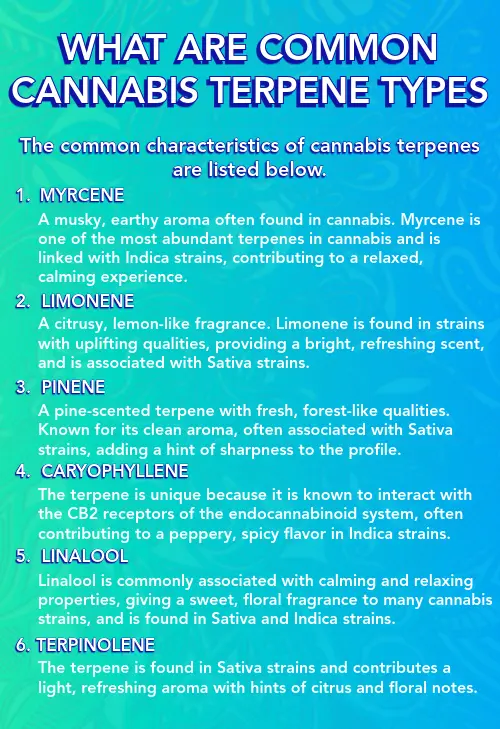
What are common Cannabis Terpene Types?
The common characteristics of cannabis terpenes are listed below.
- Myrcene: A musky, earthy aroma often found in cannabis. Myrcene is one of the most abundant terpenes in cannabis and is linked with Indica strains, contributing to a relaxed, calming experience.
- Limonene: A citrusy, lemon-like fragrance. Limonene is found in strains with uplifting qualities, providing a bright, refreshing scent, and is associated with Sativa strains.
- Pinene: A pine-scented terpene with fresh, forest-like qualities. Pinene is found in cannabis and is known for its clean aroma, often associated with Sativa strains, adding a hint of sharpness to the profile.
- Caryophyllene: A spicy, peppery aroma found in cannabis. The terpene is unique because it is known to interact with the CB2 receptors of the endocannabinoid system, often contributing to a peppery, spicy flavor in Indica strains.
- Linalool: A floral, lavender-like scent. Linalool is commonly associated with calming and relaxing properties, giving a sweet, floral fragrance to many cannabis strains, and is found in Sativa and Indica strains.
- Terpinolene: A sweet, floral, and herbal scent. The terpene is found in Sativa strains and contributes a light, refreshing aroma with hints of citrus and floral notes.
- Humulene: A woody, earthy scent commonly found in cannabis. Humulene has a distinct hoppy aroma and is most present in Indica strains, contributing to a more subdued, earthy flavor profile.
- Ocimene: A sweet, citrusy, and herbal fragrance. Ocimene is present in cannabis strains with a refreshing, minty aroma, commonly found in Sativa strains.
- Terpineol: A soft, floral, and slightly citrusy aroma. Terpineol adds sweet and pleasant floral notes to cannabis and is found in Indica and Sativa strains.
- Bisabolol: A sweet, floral, and mildly spicy scent. Bisabolol contributes to the floral aroma and is linked with Sativa strains, found in some cannabis strains.
How are Botanical Terpenes and Cannabis Terpenes different?
Botanical terpenes and cannabis terpenes differ in their sources, formulation, and context. Botanical terpenes refer to the terpenes found in different plants, including flowers, fruits, herbs, and trees. The terpenes contribute to the distinctive smells of plants (lavender, citrus, or pine), which are used in aromatherapy, cosmetics, and cleaning products. Cannabis terpenes are found in cannabis plants and contribute to the characteristic aroma and flavor of different cannabis strains. Cannabis terpenes appear in cannabis product descriptions, lab reports, or formulations to help consumers identify the sensory profile of a strain or oil. Botanical terpenes and cannabis terpenes are similar in composition but are distinguished by their origin and usage. Cannabis terpenes are part of a larger spectrum of compounds, including cannabinoids, that work together in a plant extract.
Is Terpene Spray the same as a Natural Terpene Profile?
No, terpene spray is not the same as a natural terpene profile. A terpene spray consists of added terpenes, extracted and concentrated from various plants or synthesized for specific applications (fragrance or flavoring). The spray replicates or boosts aromatic profiles, and its composition can vary based on the intended purpose. A natural terpene profile refers to the unique combination of terpenes naturally occurring in a plant. The profiles are shaped by the plant’s genetics and environmental factors, giving it its distinct scent, taste, and possibly other characteristics.
How does CBD Oil relate to Cannabis Terpenes?
CBD oil relates to cannabis terpenes through the process of extraction from the cannabis plant. The terpenes can improve the natural flavor and aroma of the oil, and may work with CBD to promote the entourage effect. The presence of cannabis terpenes in CBD oil does not guarantee the expected outcomes but adds to the sensory experience of the product. The oil retains the plant’s natural terpenes, including myrcene, limonene, or caryophyllene, which contribute to the oil’s aroma and flavor profile. The terpenes are included in CBD oil formulations in full-spectrum or broad-spectrum products. Terpene information is included on product labels, lab results, or in product descriptions to highlight the specific compounds that are present in the oil.
How do Terpene Profiles appear in CBD Oil?
Terpene profiles appear in CBD oil through formulations. A terpene profile details the specific terpenes that are present in the oil and their concentrations. For example, full-spectrum CBD oil formulations may contain terpenes (myrcene, limonene, and pinene), which contribute to the aroma, flavor, and potential effects of the oil. Lab reports detail the terpene profiles in oils, analyzing terpenes and cannabinoids. The profiles help consumers seeking specific combinations, providing a richer experience than CBD isolates, and describe the complex CBD oil composition without claiming benefits or efficacy.
Can Cannabis Terpenes be present in CBD Oil formulations?
Yes, cannabis terpenes can be present in CBD oil formulations, which are presented in product descriptions, lab summaries, or formulations for full-spectrum oils. A terpene profile details the specific terpenes that are present in oil and their concentrations. The terpene profile in oils may be detailed in lab reports, which provide an analysis of the various terpenes and cannabinoids present. The profiles are valuable for consumers who are looking for a specific combination of terpenes and cannabinoids, as they can offer a more complete and nuanced experience compared to CBD isolate products. The terpene profile is a way to describe the complex composition of the CBD oil formulations, without making claims about benefits or efficacy.
How do Cannabis Terpenes Influence the Flavor Profile of Pluto Strain?
Cannabis terpenes influence the flavor profile of Pluto strain through its rich and complex flavor profile. The dominant terpenes in Pluto include myrcene, caryophyllene, and limonene, each contributing distinct sensory characteristics to the overall experience. Myrcene is found in many Indica strains and provides a musky, earthy flavor that adds depth to the strain’s profile, giving it a smooth, slightly herbal taste. Caryophyllene has spicy, peppery notes, complements the earthy undertones, while limonene introduces a subtle citrusy aroma and flavor, brightening the sensory experience. The combination of the terpenes creates a balanced profile that is relaxing and flavorful, making Pluto strain appealing for consumers who appreciate rich, earthy flavors with a refreshing citrus twist.
Which Cannabis Terpenes are Most Noticeable in the Georgia Pie Strain?
The cannabis terpenes that are most noticeable in the Georgia Pie strain include myrcene, caryophyllene, and terpinolene. Myrcene is known for its earthy, herbal qualities, providing the base of the strain’s flavor, offering a grounding, slightly musky taste. Caryophyllene, with its spicy, peppery aroma, adds a layer of complexity to the flavor profile, contributing to a stronger, spicy experience. Terpinolene gives off floral and herbal notes, introducing a fresh, sweet element to the strain’s flavor, balancing out the more savory terpenes. The terpenes combine to create a sweet yet savory flavor profile with floral undertones, making Georgia Pie strain a unique and flavorful strain.